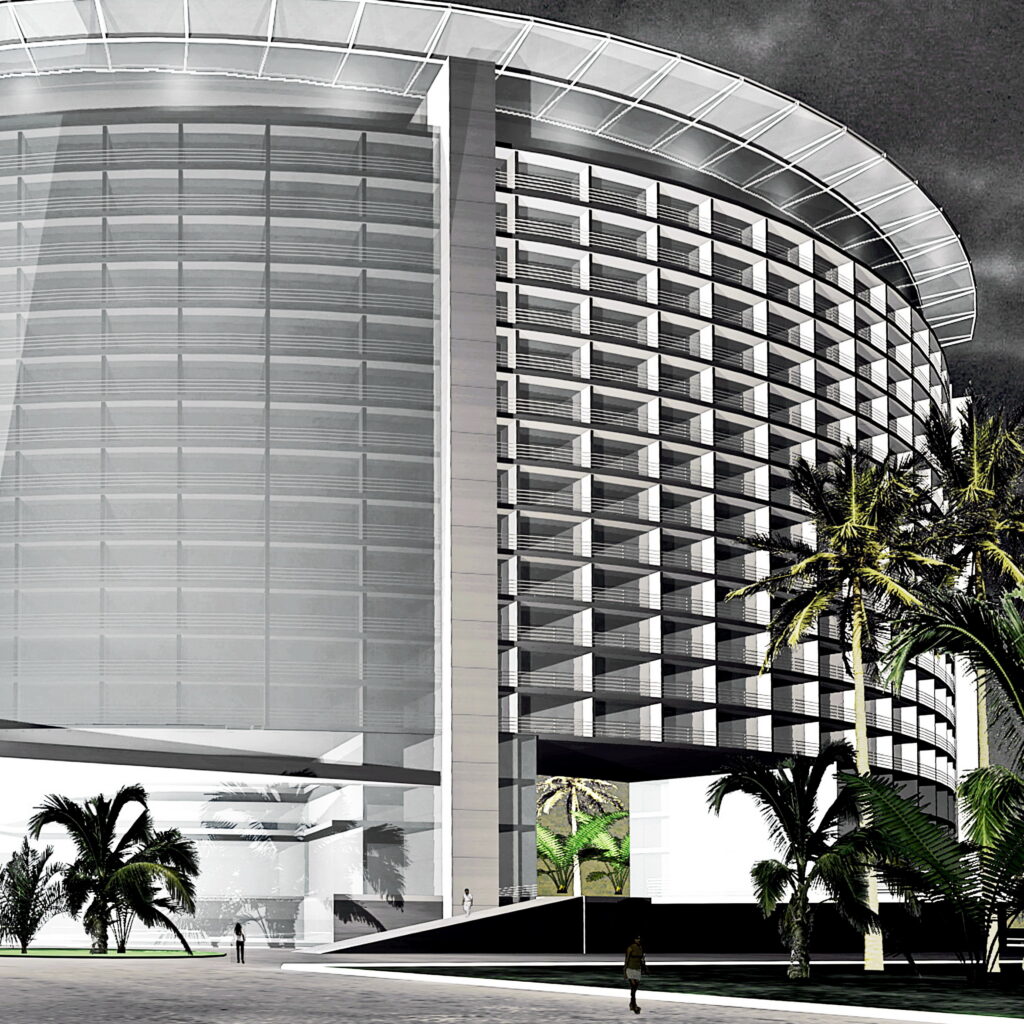
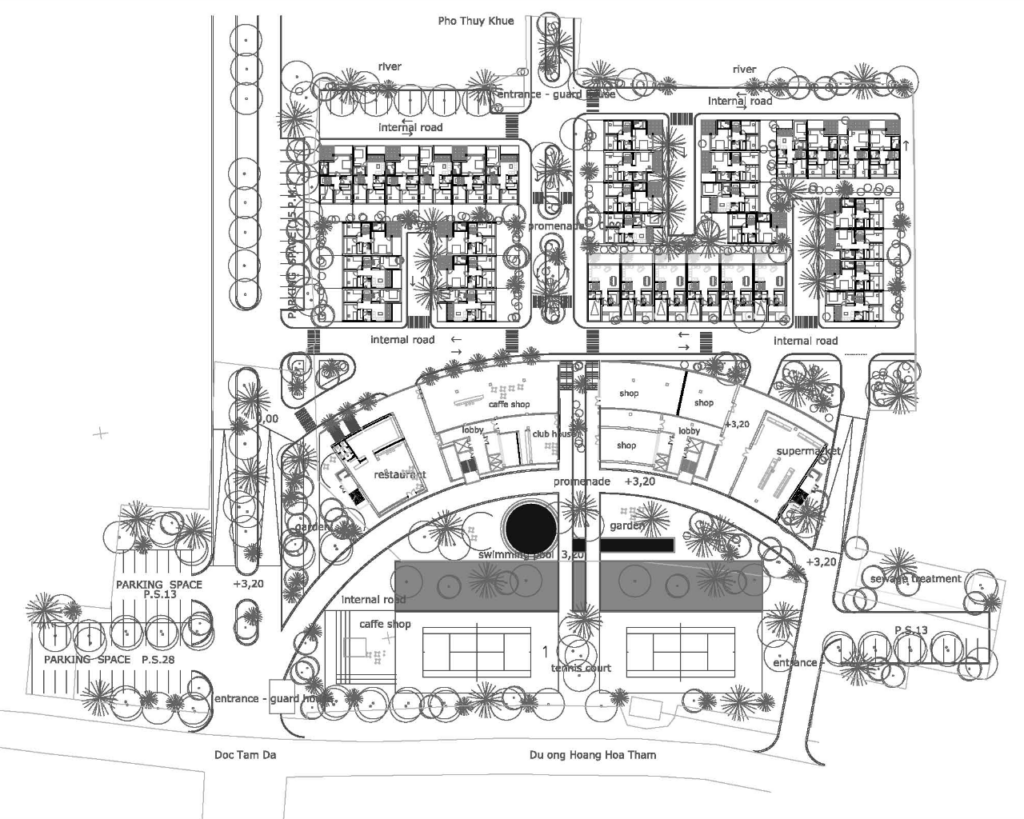
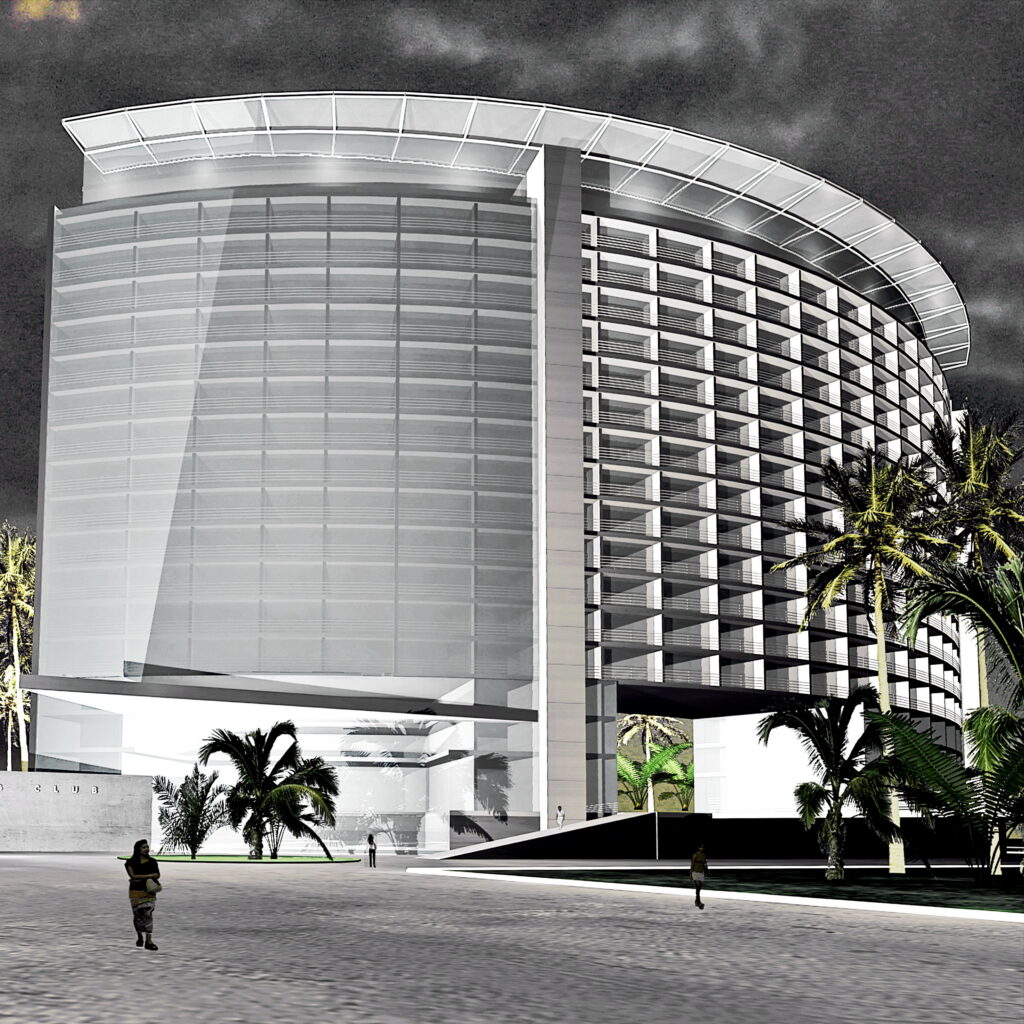
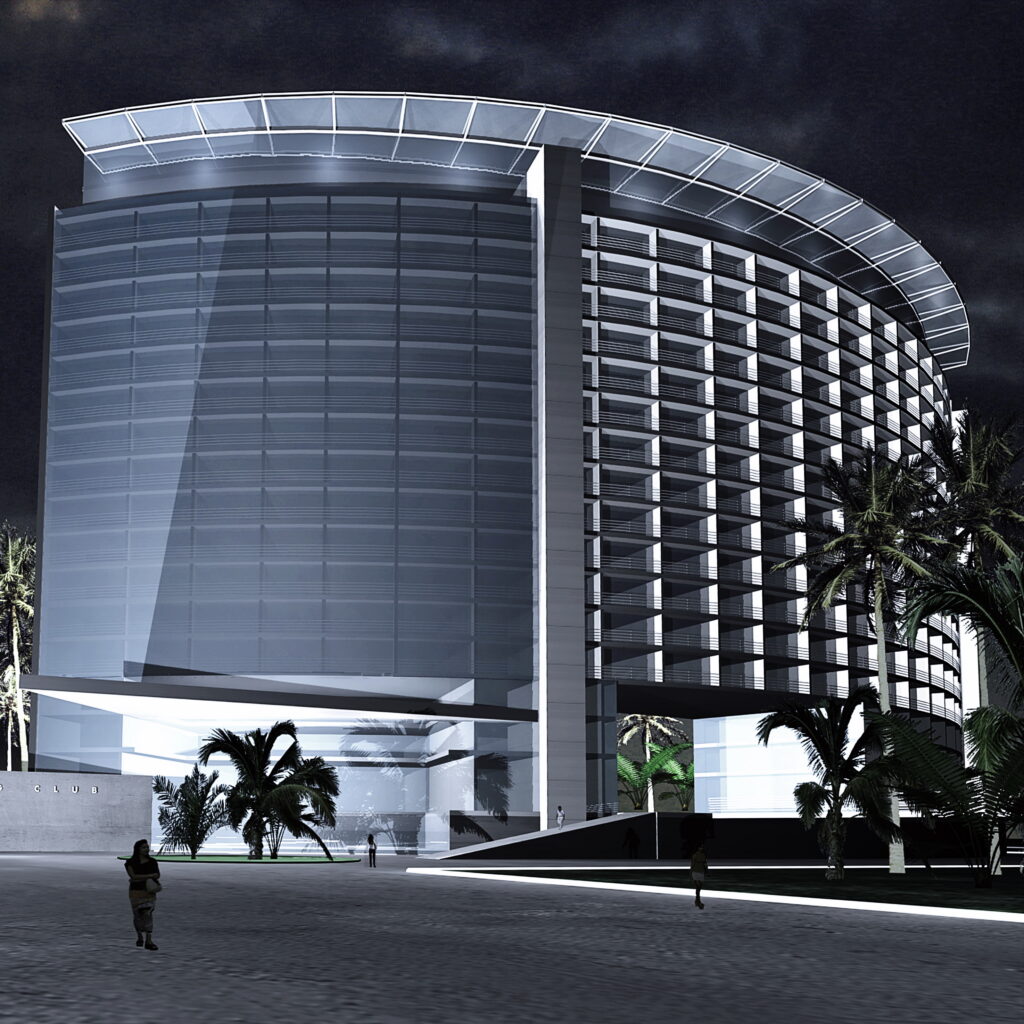
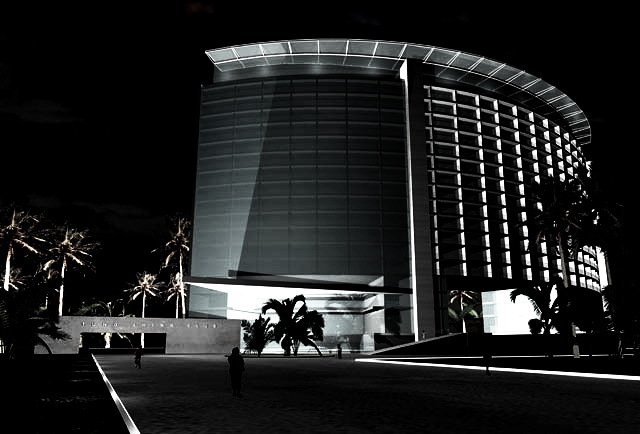
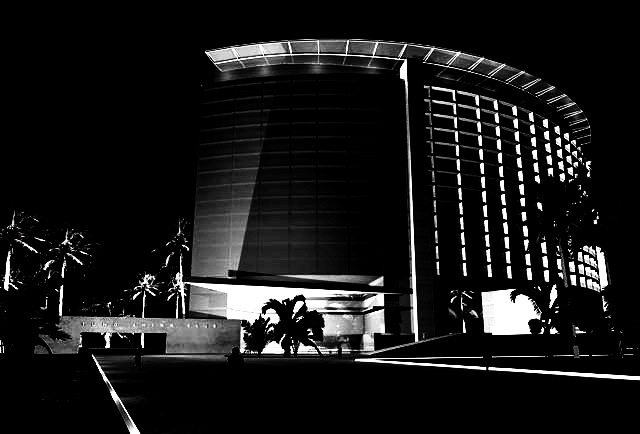
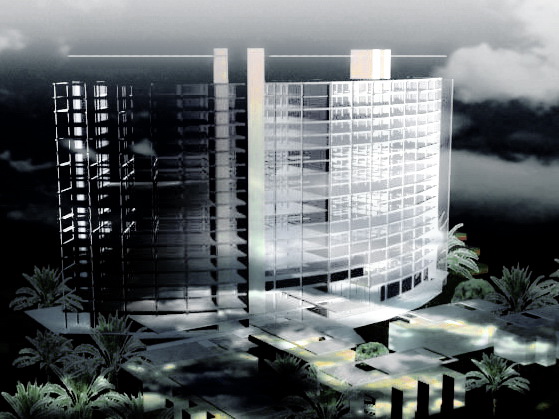
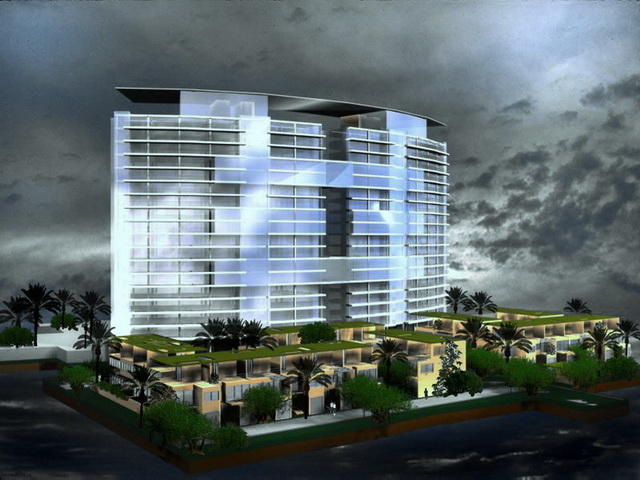
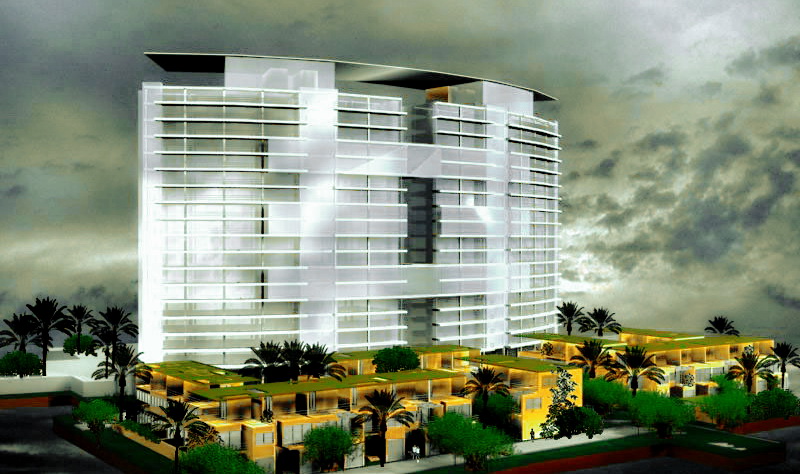
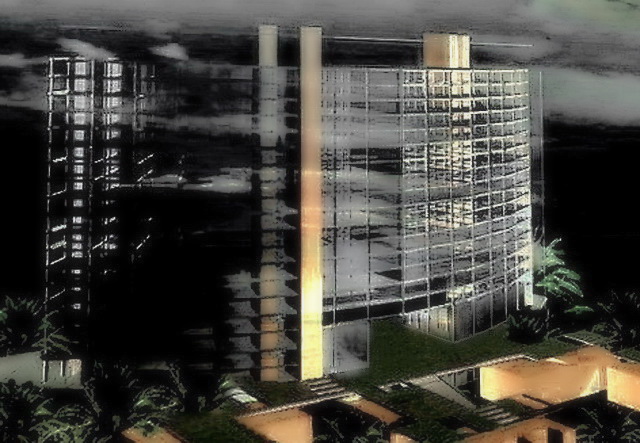
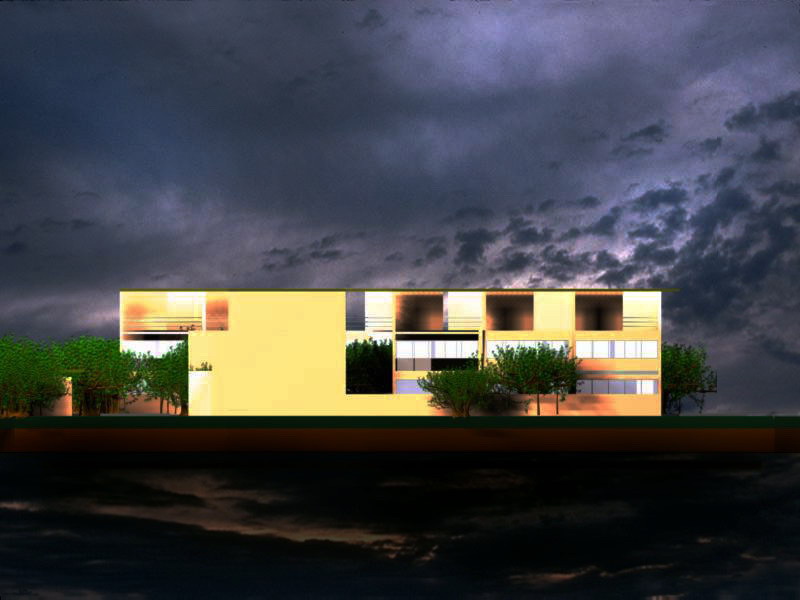
The investor´s intention to build a new executive residential complex in the broader central district of Hanoi, in place of an abandoned shoe factory, [practically creating the high-end residential market], gave us an opportunity to study the phenomenon of the transformation of the Far East cities under the influence of dramatically changed economic conditions, initiated previously in Hong Kong, Singapore, Kuala Lumpur, Shanghai, Bangkok.
After a long period of isolation, the major cities of Vietnam – Ho Chi Minh City (Saigon) and Hanoi – have joined this process. The “hibernation” preserved the authentic French colonial town beauty and a visible presence of all previous historic levels. The absence of planning normative and the borders of the plot as the only limitation negated completely the known methodologies, reducing the context to climatic, social and partly infrastructural aspect, and the immediate physical surrounding to a completely transformable, pulsing space. The cut in the existing lace weaving of narrow streets and humid and dark courtyards of typical Hanoi tube houses opened dilemma about the correctness of the designing act.
On one hand, the belief in Le Corbusier´s concept of the Sun City, the universal concept of the life quality improvement, the Futurists ideas that “each generation has right to its cities”, and the need to balance the natural and the built, justified the basic principles of the project. But the feeling that this residential complex is just a part of a much wider process in which all local influences are denied, so visible in the Far East, questions again the role of the architect in the society. With the architects’ decision narrowed only to the formal aspect, and even there with severe financial constraints, we longed for “More ethics, less aesthetics”.
Zorica Savičić