Work Classification: Exhibitions

  • IR’O

    IR’O

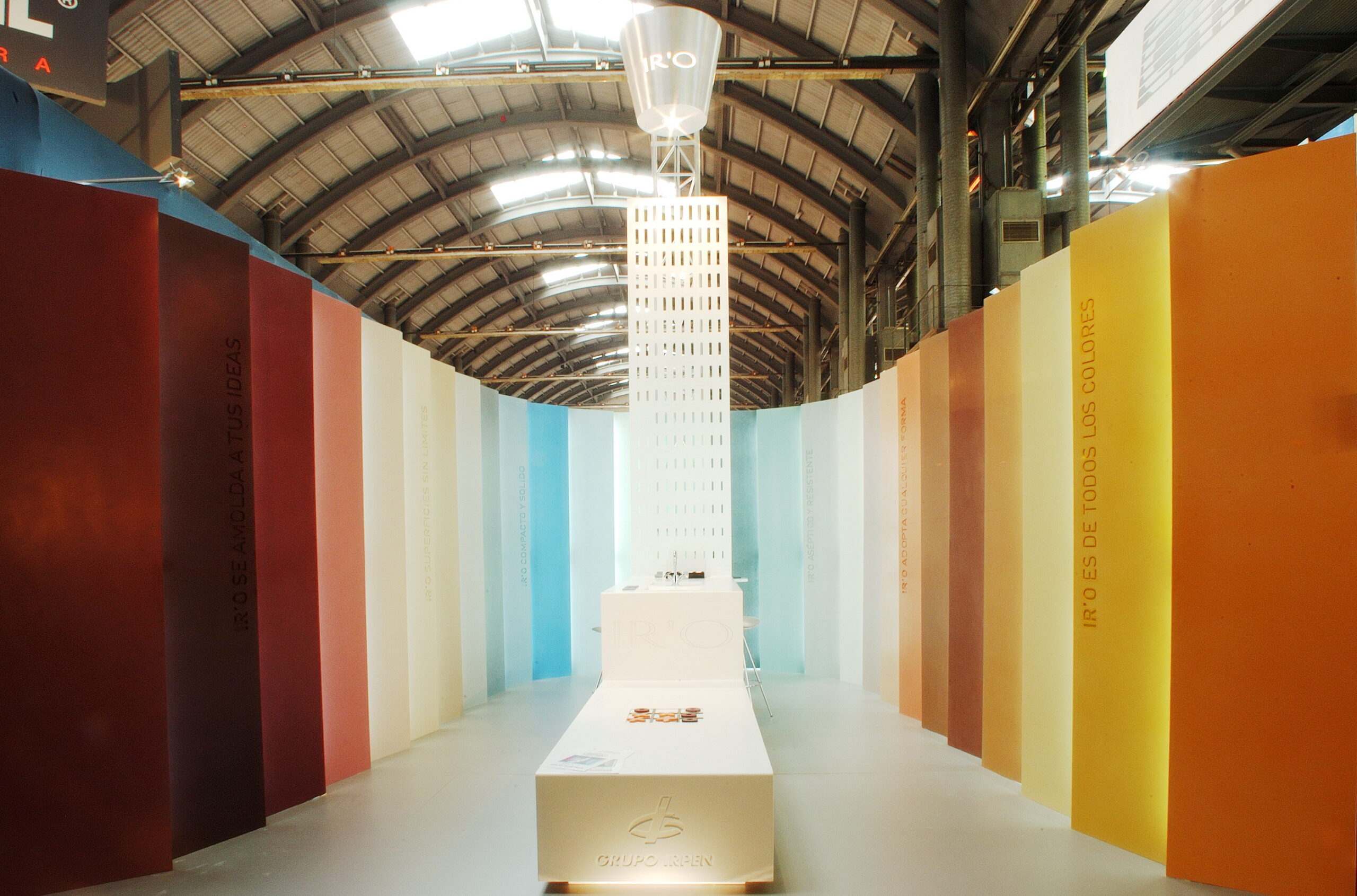
    IR’O brings its factory to Construmat Fair. A big piece of IR’O emerges from the bucket brought from the plant, announcing the stand from far away. It transmits the idea of moulding, brings the material to the visitor and suggests a variety of uses. The central piece materializes as a light plate; numerical control perforation turns it into a rain of IR’O drops that falls like a vertical lattice, to be transformed into a kitchen bar for attending the public, with a sink full of show-objects, game pieces made of IR’O. Flowing further, it becomes a solid volume and serves as a bank, inviting to sit and play. An extended (pan)tone guide made in IR’O surrounds the central piece, containing illumination and graphic technical information. The design contemplates the minimization of external elaboration and the possibility of dismantling the elements and adapting them for successive fairs.

    Gianni Ruggiero

  • Božur Ivanović: Granaries

    Božur Ivanović: Granaries

    In our culture bread is a synonym for food, its shortage for hunger. Hence the great care that the traditional architecture dedicates to the facilities for grain storage. The granaries for wheat and corn are raised above the ground to preserve precious grains from moisture and rodents and to improve their ventilation. It has been their universal characteristic for thousands of years, in the geographical areas as diverse as the Nordic countries, Spain and Portugal, Turkey, China, Japan, Sub-Saharan Africa or Indonesia.

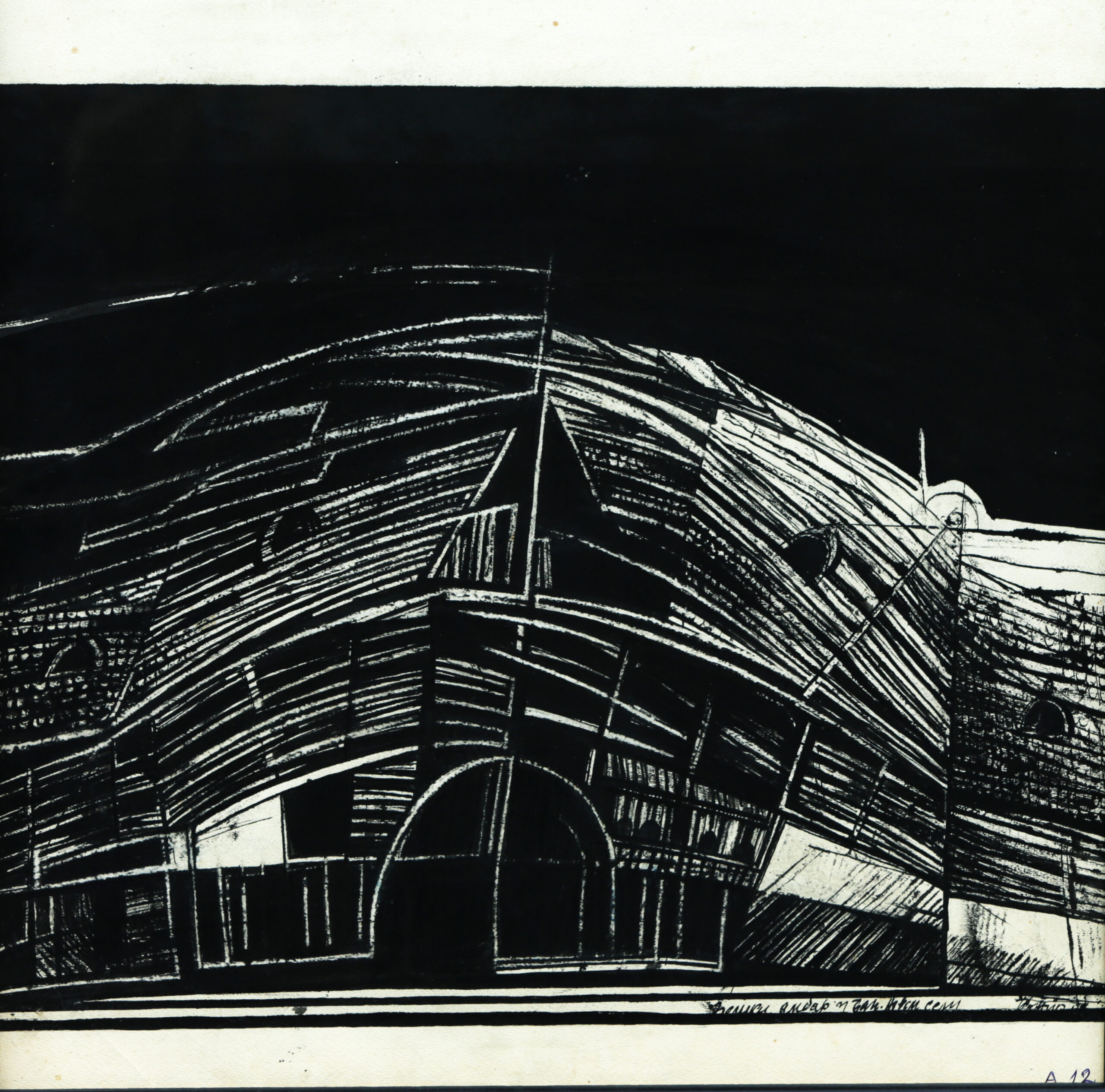
    What is specific to the granaries of Serbia, in compact Pannonian villages, however, is a combination of functions. Not only the granaries and bins, wheat and corn, are horizontally connected, but as a rule they are raised above the ground level summer kitchens, and above them the pigeon houses are set. Conserving of food for winter enhances the symbolism of these farmers’ treasuries, which today bear witness to a preindustrial way of life, the human spirit, values ​​and ideas, and are of great importance not only in architectural, but also in anthropological and cultural terms. Sometimes transferable, sometimes utilitarianly reduced, and sometimes with a porch, richly decorated, they express the status of the farmer, but also his aspiration for beauty and respect for nature and bread.

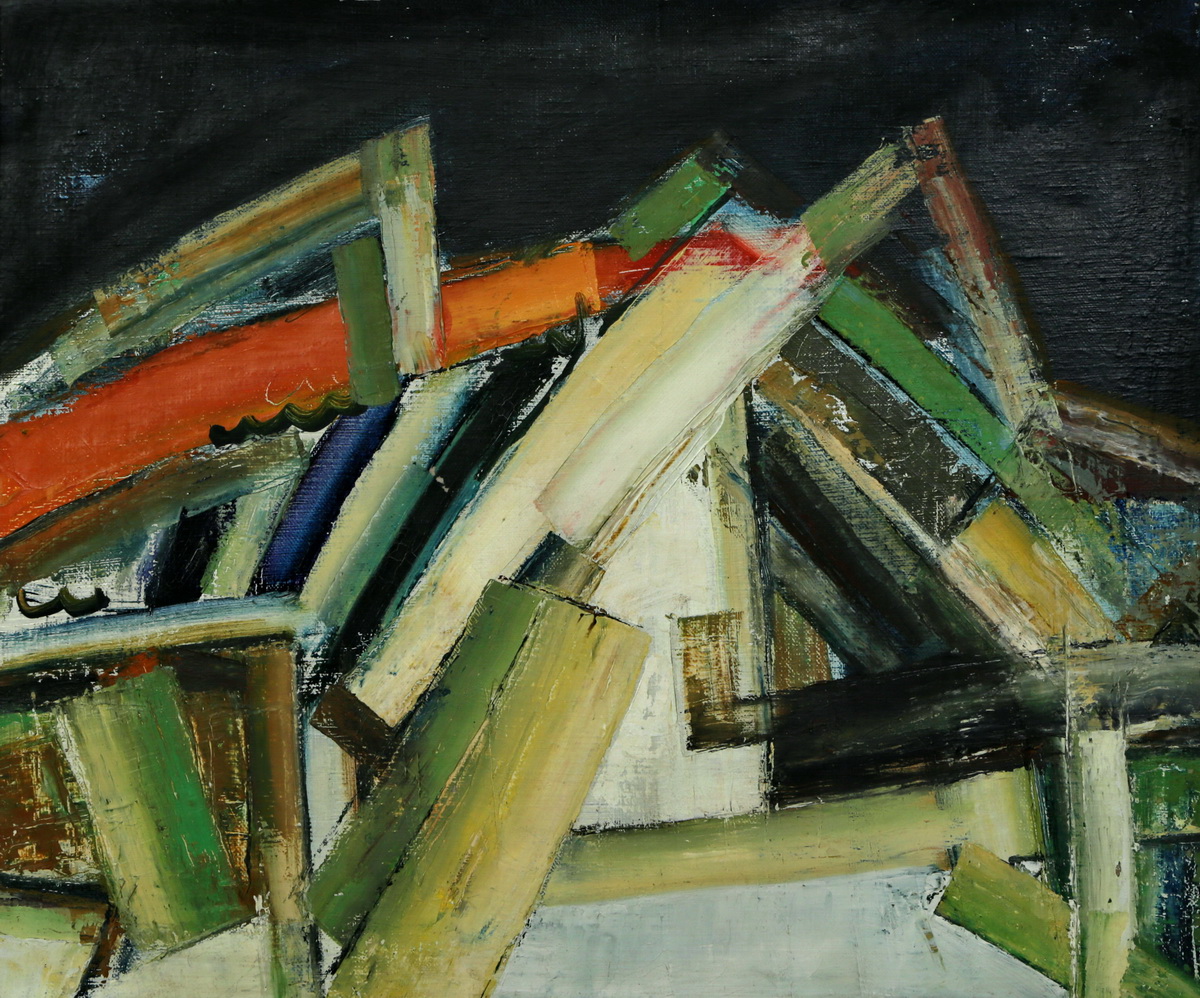
    That respect, symbolized by the solar disc, rolls through the iconography of the agrarian culture of Serbia from watermill point to decorations on kneading-troughs (furniture for storing flour and kneading bread) to the form of ritual bread. In the same way, the Pannonian fields, together with their rich fruit, are pouring in the pictures of Božur Ivanović into an explosion of colours and shapes of Banat barns and granaries. They are full to bursting, a cornucopia of life itself; they move and float over the great plain, merge with it and become one under the heaven.

    Ivanović’s ink drawings, yet, point out a different meaning of this deconstruction. The village collapses, and he as a diligent chronicler records this decline, highlighting it by mixing of media, paper tearing, shape distortion, bursting. The streets unwind endlessly, the strokes hurry and bend as heads of grain in a storm. In a symbolic meeting of the material and spiritual heritage, the author finds a way to remember its beauty, which calls for the protection, preservation and celebration of traditions, villages, bread, life.

    ​

    Dr. Mila Nikolić, exhibition and catalogue author

  • Beach as a City

    Beach as a City

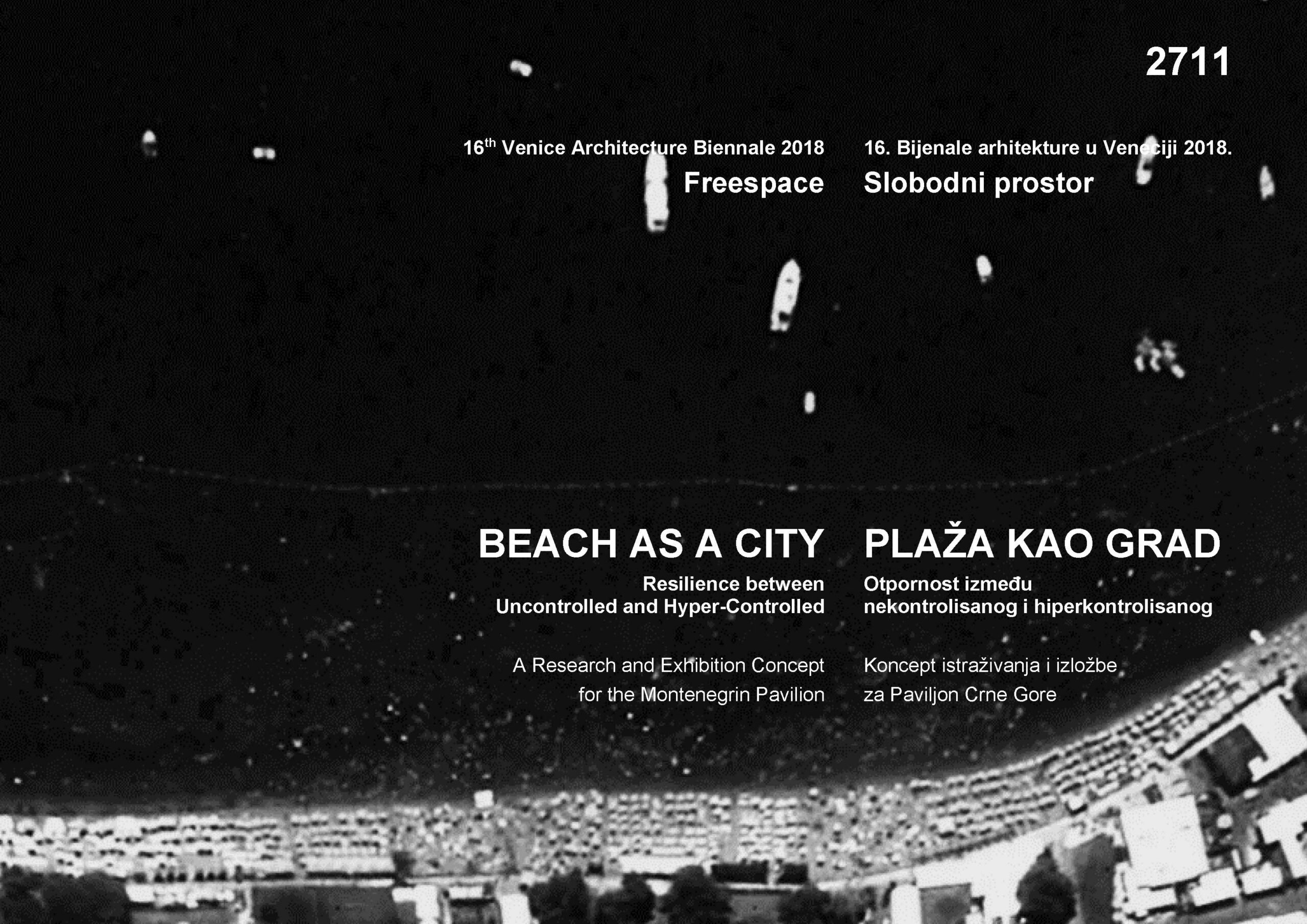
    Beach is an ultimate freespace: opened to everyone, democratic, it is a place of socializing and connecting with nature and its elements. Urban beaches go even further. In the encounter of the water and the city, they mirror all social and urban transformations. These public spaces, where the modern ideals of equality and healthy lifestyle were meeting and being fulfilled, have dramatically changed in Montenegro in the past decades. They turned into places of consumption and exclusivity, their accessibility diminishing rapidly and their capacity effectively decreasing to less than a third.

    At the same time, the massive uncontrolled urban development increased manifold the size and density of the coastal towns, creating around the original nuclei an urban tissue without identity, order, structure, infrastructure – nor public space. In addition, the old model of tourism, where the public and tourist spaces and interests were shared, has been substituted with the neoliberal one. It creates an impossible tension between the living towns and the hypercontrolled, enclosed resorts, privatizing the shared freespace and blocking a comprehensive urban experience from the citizens and tourists likewise.

    How can a town live without public space? How to be on the coast without the sea? How can the beach tourism grow without beaches? How to be an ecological state without nature in the towns? How is it possible that one society gives up its urbanity and future? Its youth and its health? How to build resilience in (and to) such a situation? A lusophone definition of urban beaches as ‘yellow squares’ (praças amarelas) indicates a possible answer to many questions that arise from these contradictions: the role the beaches in the Montenegrin coastal towns still may recover and advance to become bearers of urban resilience.

    Mila Nikolić

  • Ljubljana Cultural Infrastructure

    Ljubljana Cultural Infrastructure

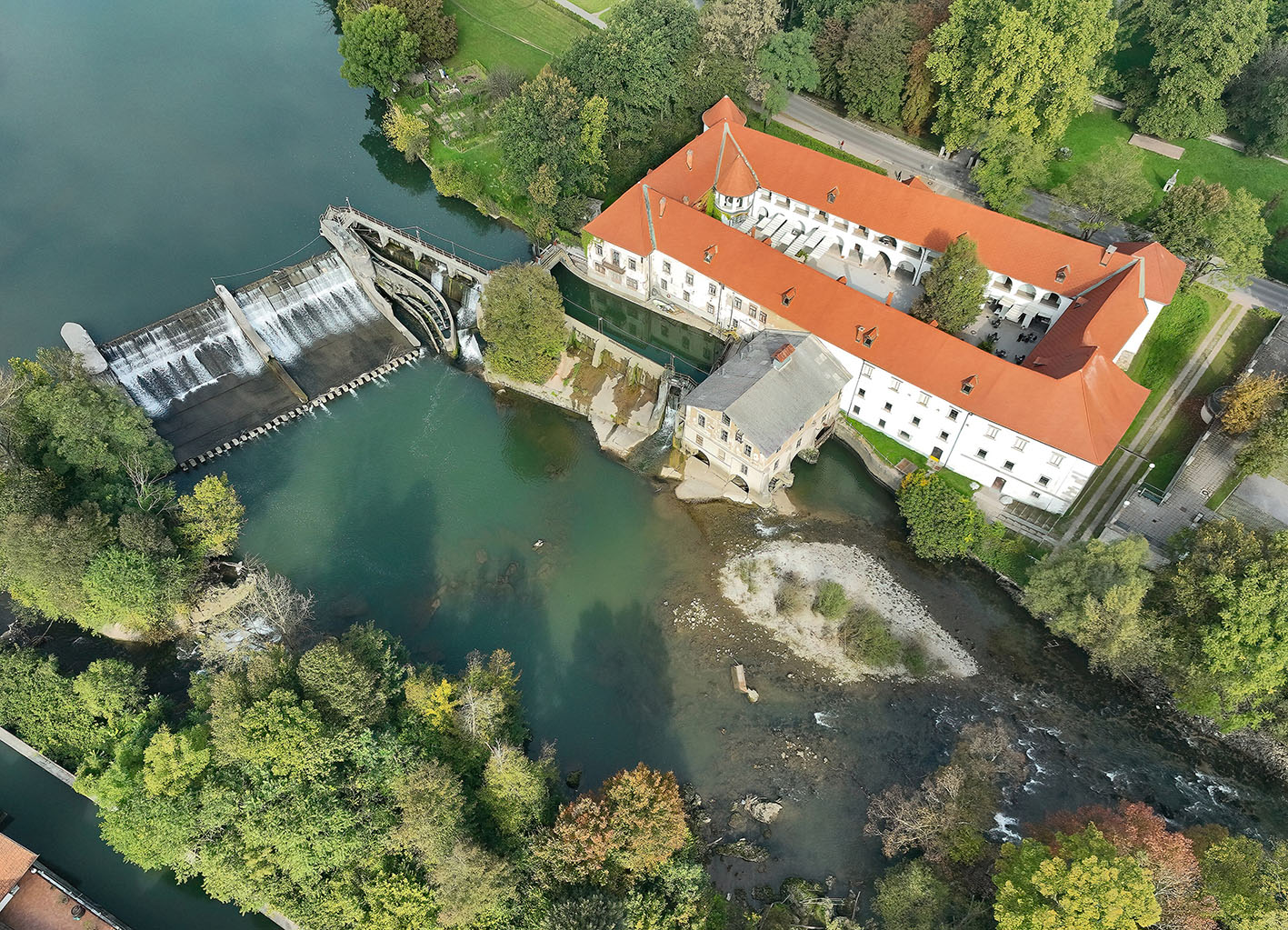
    This proposal examines Ljubljana as a compact and legible cultural infrastructure system in which museums, universities, public space, and landscape operate as a continuous urban framework. Developed for the Museum of Architecture and Design (MAO) and the BIO 29 Biennial of Design, the project approaches cultural infrastructure as a soft spatial system through which knowledge, memory, and collective life are organised and maintained.

    Using MAO as a strategic point of entry, the proposal investigates how cultural institutions, pedestrian corridors, river landscapes, and green systems structure urban continuity and civic experience. It treats the city not as a collection of isolated institutions, but as an interconnected cultural field, and proposes methods for mapping and interpreting these relationships through exhibition and design research.

    Conceived as both a local case and a transferable model, the project opens toward a broader question: how cultural infrastructure can help articulate natural and industrial landscapes as part of a shared territorial understanding.

  • Božur Ivanović: Paintings

    Božur Ivanović: Paintings

    In the life of each of us there is a painting that permanently defines his understanding of art and forms his worldview. For me, that is the painting “Bunjište (Midden)” by Božur Ivanović, with which I grew up exploring its forms, questioning its meanings and rejoicing in its colours. It is a part of one, today almost unknown, exuberant painting cycle of this author, whose creative opus is for the first time shown systematically to the public through these exhibitions.

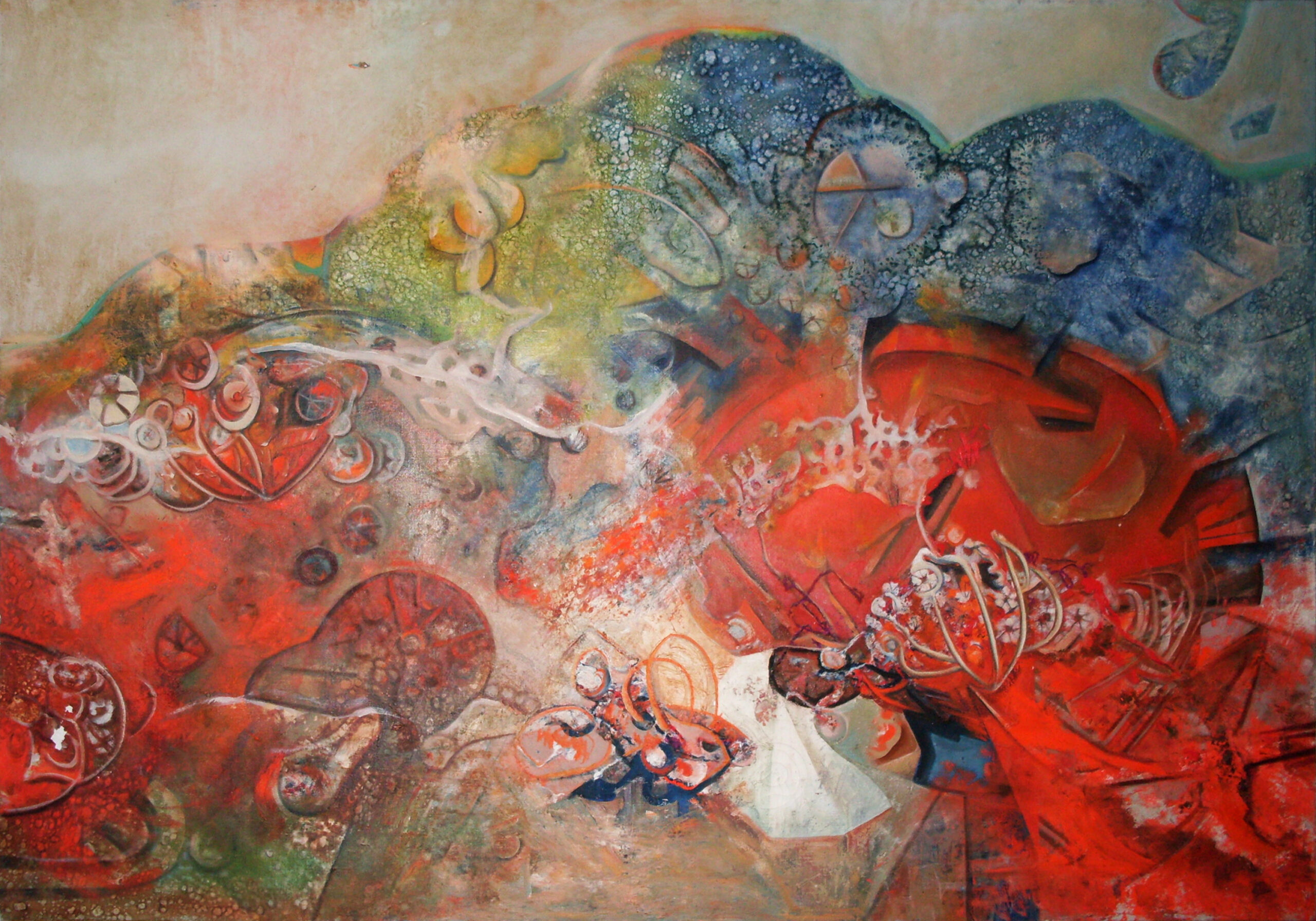
    Only a comprehensive chronological review allows us to discover the links, themes, media and poetics of Ivanović’s works, which change as a reflection of different life stages, environments and interests. After graduation, he replaced his student fascination with fresco painting for the professional restoration and copying of frescoes over the monasteries of Serbia and Macedonia. This influence is reflected in his early works of strong colours and contrasts and large formats, such as “Redenik (Bandolier)”, “Bunjište (Midden)” and “Rađanje života (The Birth of Life)”, which express the enormous energy and optimism of the young author pondering over the world and life.

    Dedicated in the maturity to the decentralization of culture, Ivanović introduces the motives of the Banat village into the abstract figuration of his paintings, defining his most famous creative phase “Ambari (Granaries)”. In his paintings, the Pannonian fields and their rich crop overflow into the explosion of colours and shapes of the Banat granaries and barns. Full to bursting, they symbolize abundance and glorify life, floating through the endless plain with which they merge under the heavenly vault. Their spraying and deconstruction in Ivanović’s drawings in ink acquire another meaning. By distorting the forms, breaking up the elements, splitting the paper and combining techniques, the artist emphasizes the deterioration of the village, hurrying to record its beauty with a quick and confidant gesture and to invite us to its preservation and revival. This encounter of nature and civilization, spiritual and material heritage, is retained in late Ivanović’s works, in which he captures with easy strokes the Boka landscapes of his peace.

    In Ivanović’s scenography work, which includes performances “Kir Janja”, “Partija šaha (Chess Game)” and others, there are the same, recognizable artistic expression and plastic and architectural elements. This retrospective allows for that significant segment of his creation to be re-documented, interpreted and evaluated, almost half a century after it was created and awarded for its translucency and elegance.

    It is less known that Božur Ivanović, in addition to fine arts and scenography, successfully dealt with graphic design and illustrated book covers. In the 1970s and 1980s, he created the visual identity of numerous companies in Serbia, including the famous “Utva” logo, “Ratar” flour packaging that we still remember, and a series of labels for “Vršački vinogradi”, some of which are still in use. This work is not covered by the retrospective – the research on Ivanović as a designer is still ahead of us.

    Božur Ivanović belongs to perhaps the last generation of painters-bohemians, urban legends and people grand in every respect, who openly criticized the society and the system of that time, but remained in the country; who bypassed the establishment and business planning and management of their lavish talents and careers. Ivanović exhibited and was awarded at several collective exhibitions, but he was prevented from organizing solo exhibitions as a mature artist because of his political inadequacy. His works are only posthumously presented completely by the exhibition “Ambari” on the occasion of the 10th anniversary of his death at the Pavilion of the Republic of Serbia at the World Exhibition in Milan 2015 and by this retrospective in Pančevo, for which he was deeply life-related and creatively bound, in order to make them closer to the domestic and the international public, to perceive and study his opus and to recognize his contribution to Serbian art.

    Mila Nikolić (from the exhibition catalogue)
  • Božur Ivanović: Drawings

    Božur Ivanović: Drawings

    In the life of each of us there is a painting that permanently defines his understanding of art and forms his worldview. For me, that is the painting “Bunjište (Midden)” by Božur Ivanović, with which I grew up exploring its forms, questioning its meanings and rejoicing in its colours. It is a part of one, today almost unknown, exuberant painting cycle of this author, whose creative opus is for the first time shown systematically to the public through these exhibitions.

    Only a comprehensive chronological review allows us to discover the links, themes, media and poetics of Ivanović’s works, which change as a reflection of different life stages, environments and interests. After graduation, he replaced his student fascination with fresco painting for the professional restoration and copying of frescoes over the monasteries of Serbia and Macedonia. This influence is reflected in his early works of strong colours and contrasts and large formats, such as “Redenik (Bandolier)”, “Bunjište (Midden)” and “Rađanje života (The Birth of Life)”, which express the enormous energy and optimism of the young author pondering over the world and life.

    Dedicated in the maturity to the decentralization of culture, Ivanović introduces the motives of the Banat village into the abstract figuration of his paintings, defining his most famous creative phase “Ambari (Granaries)”. In his paintings, the Pannonian fields and their rich crop overflow into the explosion of colours and shapes of the Banat granaries and barns. Full to bursting, they symbolize abundance and glorify life, floating through the endless plain with which they merge under the heavenly vault. Their spraying and deconstruction in Ivanović’s drawings in ink acquire another meaning. By distorting the forms, breaking up the elements, splitting the paper and combining techniques, the artist emphasizes the deterioration of the village, hurrying to record its beauty with a quick and confidant gesture and to invite us to its preservation and revival. This encounter of nature and civilization, spiritual and material heritage, is retained in late Ivanović’s works, in which he captures with easy strokes the Boka landscapes of his peace.

    In Ivanović’s scenography work, which includes performances “Kir Janja”, “Partija šaha (Chess Game)” and others, there are the same, recognizable artistic expression and plastic and architectural elements. This retrospective allows for that significant segment of his creation to be re-documented, interpreted and evaluated, almost half a century after it was created and awarded for its translucency and elegance.

    It is less known that Božur Ivanović, in addition to fine arts and scenography, successfully dealt with graphic design and illustrated book covers. In the 1970s and 1980s, he created the visual identity of numerous companies in Serbia, including the famous “Utva” logo, “Ratar” flour packaging that we still remember, and a series of labels for “Vršački vinogradi”, some of which are still in use. This work is not covered by the retrospective – the research on Ivanović as a designer is still ahead of us.

    Božur Ivanović belongs to perhaps the last generation of painters-bohemians, urban legends and people grand in every respect, who openly criticized the society and the system of that time, but remained in the country; who bypassed the establishment and business planning and management of their lavish talents and careers. Ivanović exhibited and was awarded at several collective exhibitions, but he was prevented from organizing solo exhibitions as a mature artist because of his political inadequacy. His works are only posthumously presented completely by the exhibition “Ambari” on the occasion of the 10th anniversary of his death at the Pavilion of the Republic of Serbia at the World Exhibition in Milan 2015 and by this retrospective in Pančevo, for which he was deeply life-related and creatively bound, in order to make them closer to the domestic and the international public, to perceive and study his opus and to recognize his contribution to Serbian art.

    Mila Nikolić (from the exhibition catalogue)