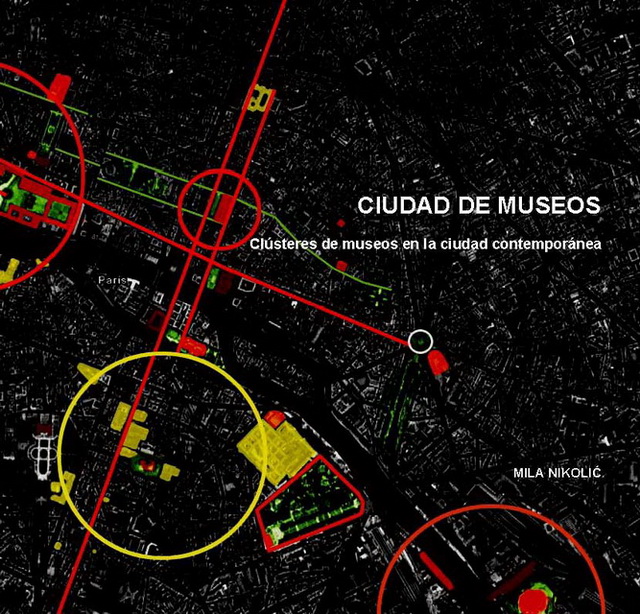
Abstract | In its intensive development in recent decades, the museum has become a symbol of industrialization of culture and culturalisation of social life, economy and urban planning. Not only has it taken the place of industry in the post-modern city – functionally, and often also physically, in abandoned industrial complexes, but it has gradually adopted its spatial behaviour and logic of clustering and networking too, which is the subject of my research. After an extensive doctoral study on the global phenomenon of museum clusters and networks, in this study I focused on their potential in the region that was effectively bypassed by the museum boom and instead constant economic, political and social crisis were going on.
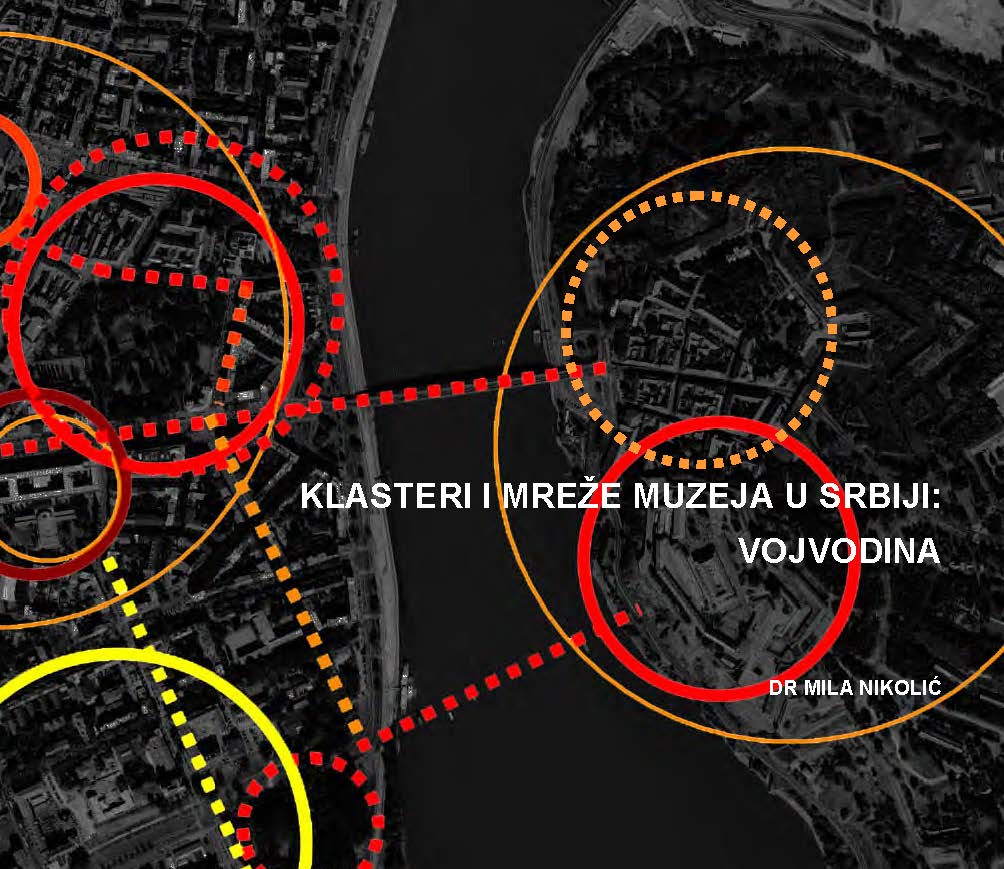
Stressing the importance of the “museum cluster effect” in the post-Bilbao and (post)crisis era, the study examines the macro-level of cultural urbanism in the cities of Serbia. It maps clusters, routes and networks of museums and other cultural institutions and spaces that support them, analyzing their role and potential in urban and regional development.
Keywords | museum, cluster, network, cultural urbanism, urban curating, contemporary city, public space, Serbia, Vojvodina