Work Classification: Graphic

  • Museums of Vojvodina

    Museums of Vojvodina

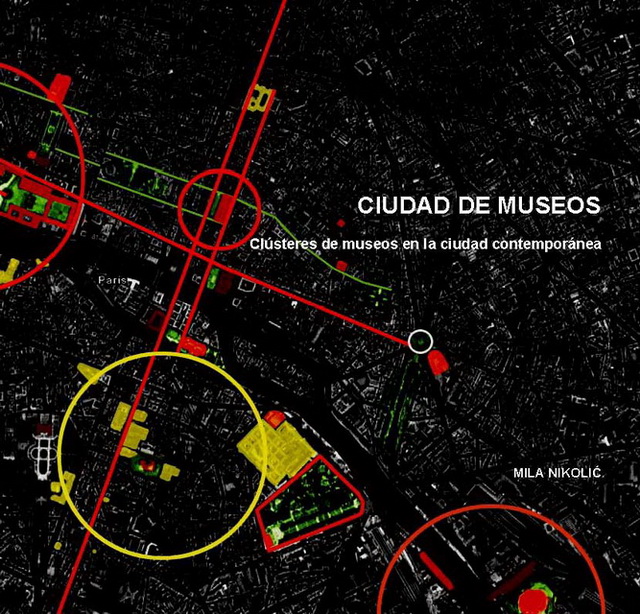
    Abstract | In its intensive development in recent decades, the museum has become a symbol of industrialization of culture and culturalisation of social life, economy and urban planning. Not only has it taken the place of industry in the post-modern city – functionally, and often also physically, in abandoned industrial complexes, but it has gradually adopted its spatial behaviour and logic of clustering and networking too, which is the subject of my research. After an extensive doctoral study on the global phenomenon of museum clusters and networks, in this study I focused on their potential in the region that was effectively bypassed by the museum boom and instead constant economic, political and social crisis were going on.

    Stressing the importance of the “museum cluster effect” in the post-Bilbao and (post)crisis era, the study examines the macro-level of cultural urbanism in the cities of Serbia. It maps clusters, routes and networks of museums and other cultural institutions and spaces that support them, analyzing their role and potential in urban and regional development.

    Keywords | museum, cluster, network, cultural urbanism, urban curating, contemporary city, public space, Serbia, Vojvodina

  • Božur Ivanović: Granaries

    Božur Ivanović: Granaries

    In our culture bread is a synonym for food, its shortage for hunger. Hence the great care that the traditional architecture dedicates to the facilities for grain storage. The granaries for wheat and corn are raised above the ground to preserve precious grains from moisture and rodents and to improve their ventilation. It has been their universal characteristic for thousands of years, in the geographical areas as diverse as the Nordic countries, Spain and Portugal, Turkey, China, Japan, Sub-Saharan Africa or Indonesia.

    What is specific to the granaries of Serbia, in compact Pannonian villages, however, is a combination of functions. Not only the granaries and bins, wheat and corn, are horizontally connected, but as a rule they are raised above the ground level summer kitchens, and above them the pigeon houses are set. Conserving of food for winter enhances the symbolism of these farmers’ treasuries, which today bear witness to a preindustrial way of life, the human spirit, values ​​and ideas, and are of great importance not only in architectural, but also in anthropological and cultural terms. Sometimes transferable, sometimes utilitarianly reduced, and sometimes with a porch, richly decorated, they express the status of the farmer, but also his aspiration for beauty and respect for nature and bread.

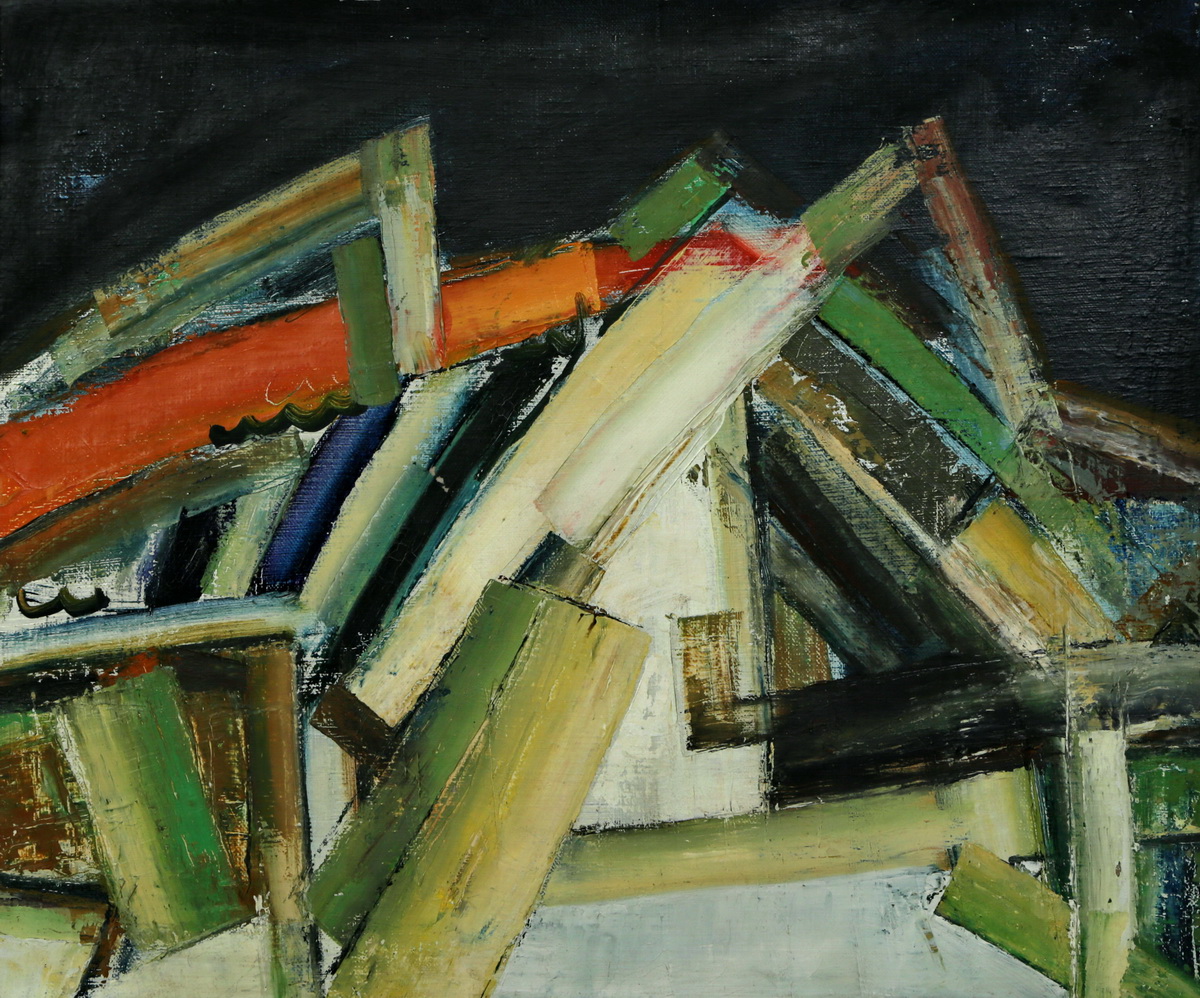
    That respect, symbolized by the solar disc, rolls through the iconography of the agrarian culture of Serbia from watermill point to decorations on kneading-troughs (furniture for storing flour and kneading bread) to the form of ritual bread. In the same way, the Pannonian fields, together with their rich fruit, are pouring in the pictures of Božur Ivanović into an explosion of colours and shapes of Banat barns and granaries. They are full to bursting, a cornucopia of life itself; they move and float over the great plain, merge with it and become one under the heaven.

    Ivanović’s ink drawings, yet, point out a different meaning of this deconstruction. The village collapses, and he as a diligent chronicler records this decline, highlighting it by mixing of media, paper tearing, shape distortion, bursting. The streets unwind endlessly, the strokes hurry and bend as heads of grain in a storm. In a symbolic meeting of the material and spiritual heritage, the author finds a way to remember its beauty, which calls for the protection, preservation and celebration of traditions, villages, bread, life.

    ​

    Dr. Mila Nikolić, exhibition and catalogue author

  • City of Museums

    City of Museums

    Abstract | In our culture the museum occupies a privileged place symbolically, but also physically, in the city. And not only does it occupy it, but it creates it, defines it, changes it and gives it meaning. This thesis demonstrates that that place is in the museum cluster. And in the cluster, out of which it becomes almost impossible to contemplate the museum, the museum is changing; the meaning and the importance of its basic aspects are changing. My hypothesis is that in the museum project the urbanistic aspect – its place and relationship with the city – takes precedence over its museographic and architectonic aspects.

    Through a historical, comparative and critical analysis of these four dimensions of the place of museums, in the four chapters, the dissertation proves the hypothesis, as well as the theory of the locus genii, showing the fundamental role of the museum cluster as a force that organizes, generates and transforms the museum system and the urban system. It demonstrates that the museum boom, by creating, changing, and emphasizing museum clusters, represents a revolution in the relationship and conception of the museum and of the city.

    Although the study includes a wider historical and geographic space to demonstrate the extension of this still little investigated and insufficiently well-known phenomenon, the accent is on the transformations of the museums and their clusters and systems during last three decades, in the principal European cities, including also the remarkable cases from other continents that suggest the possible directions of future development.

    Keywords | cultural infrastructure, museum cluster, contemporary city, public space

    Website | museumcluster.wordpress.com

    ​

  • Božur Ivanović: Paintings

    Božur Ivanović: Paintings

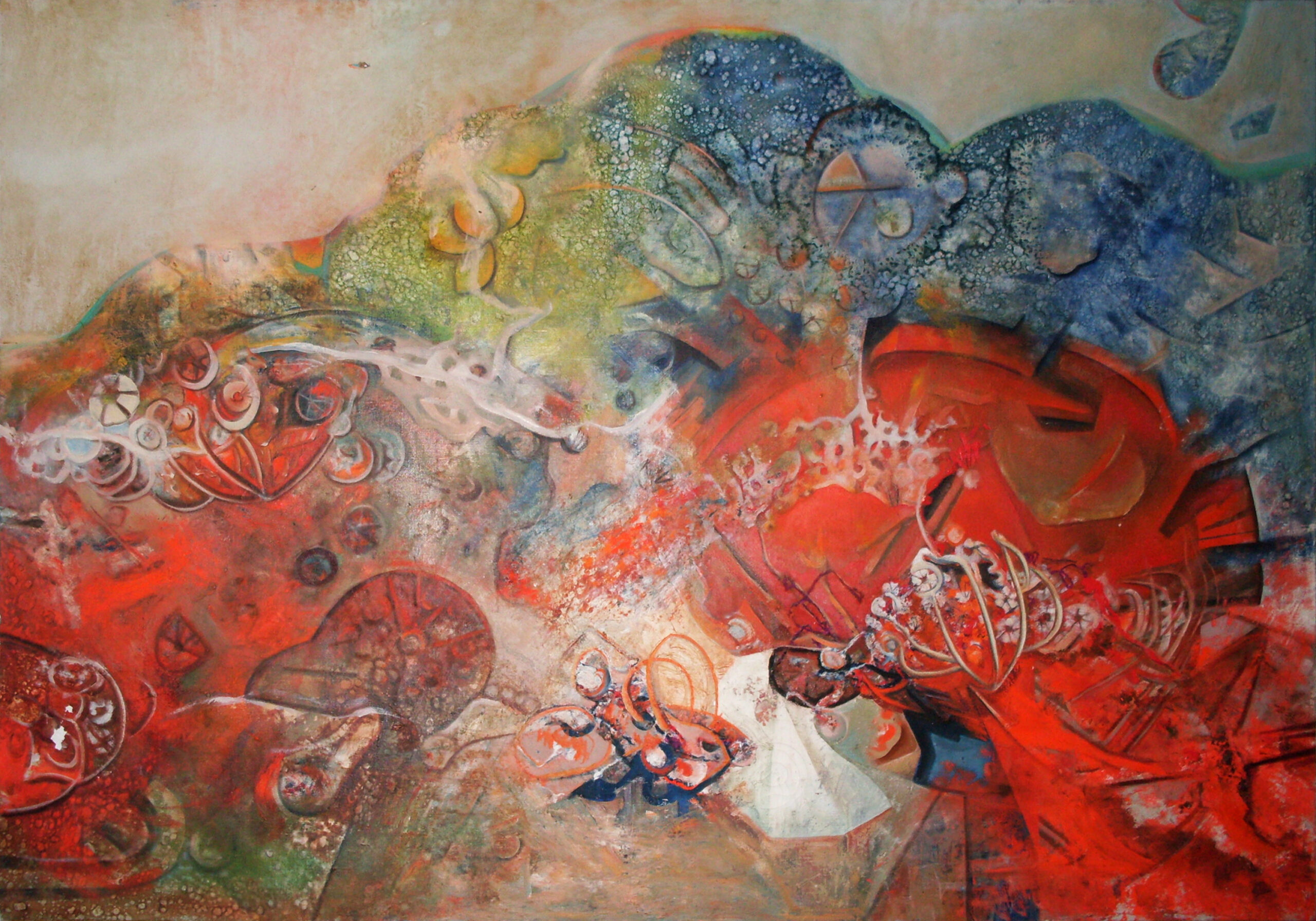
    In the life of each of us there is a painting that permanently defines his understanding of art and forms his worldview. For me, that is the painting “Bunjište (Midden)” by Božur Ivanović, with which I grew up exploring its forms, questioning its meanings and rejoicing in its colours. It is a part of one, today almost unknown, exuberant painting cycle of this author, whose creative opus is for the first time shown systematically to the public through these exhibitions.

    Only a comprehensive chronological review allows us to discover the links, themes, media and poetics of Ivanović’s works, which change as a reflection of different life stages, environments and interests. After graduation, he replaced his student fascination with fresco painting for the professional restoration and copying of frescoes over the monasteries of Serbia and Macedonia. This influence is reflected in his early works of strong colours and contrasts and large formats, such as “Redenik (Bandolier)”, “Bunjište (Midden)” and “Rađanje života (The Birth of Life)”, which express the enormous energy and optimism of the young author pondering over the world and life.

    Dedicated in the maturity to the decentralization of culture, Ivanović introduces the motives of the Banat village into the abstract figuration of his paintings, defining his most famous creative phase “Ambari (Granaries)”. In his paintings, the Pannonian fields and their rich crop overflow into the explosion of colours and shapes of the Banat granaries and barns. Full to bursting, they symbolize abundance and glorify life, floating through the endless plain with which they merge under the heavenly vault. Their spraying and deconstruction in Ivanović’s drawings in ink acquire another meaning. By distorting the forms, breaking up the elements, splitting the paper and combining techniques, the artist emphasizes the deterioration of the village, hurrying to record its beauty with a quick and confidant gesture and to invite us to its preservation and revival. This encounter of nature and civilization, spiritual and material heritage, is retained in late Ivanović’s works, in which he captures with easy strokes the Boka landscapes of his peace.

    In Ivanović’s scenography work, which includes performances “Kir Janja”, “Partija šaha (Chess Game)” and others, there are the same, recognizable artistic expression and plastic and architectural elements. This retrospective allows for that significant segment of his creation to be re-documented, interpreted and evaluated, almost half a century after it was created and awarded for its translucency and elegance.

    It is less known that Božur Ivanović, in addition to fine arts and scenography, successfully dealt with graphic design and illustrated book covers. In the 1970s and 1980s, he created the visual identity of numerous companies in Serbia, including the famous “Utva” logo, “Ratar” flour packaging that we still remember, and a series of labels for “Vršački vinogradi”, some of which are still in use. This work is not covered by the retrospective – the research on Ivanović as a designer is still ahead of us.

    Božur Ivanović belongs to perhaps the last generation of painters-bohemians, urban legends and people grand in every respect, who openly criticized the society and the system of that time, but remained in the country; who bypassed the establishment and business planning and management of their lavish talents and careers. Ivanović exhibited and was awarded at several collective exhibitions, but he was prevented from organizing solo exhibitions as a mature artist because of his political inadequacy. His works are only posthumously presented completely by the exhibition “Ambari” on the occasion of the 10th anniversary of his death at the Pavilion of the Republic of Serbia at the World Exhibition in Milan 2015 and by this retrospective in Pančevo, for which he was deeply life-related and creatively bound, in order to make them closer to the domestic and the international public, to perceive and study his opus and to recognize his contribution to Serbian art.

    Mila Nikolić (from the exhibition catalogue)

  • Friendship Park

    Friendship Park

    New Belgrade City Park has a privileged position along the Danube: it connects the city blocks with the river and, as a communication and landscape axis, ties the Old Town, New Belgrade and Zemun (image 1) by the optimism carried in the notion of the Friendship Park. Its reactivation would serve not only to a higher quality of life in the city, but also as an excellent means of urban marketing – both for the world and for the citizens.

    The return of direct contact with the coast and the water in the waterfront regenerations worldwide opens up here additional topics: the renewal of the concepts of progress and modernity, the preservation and construction of public space as the last defence of Homo Ludens before privatization, and the creation of a positive image for Belgrade.

    The key for activation of the Park of Friendship lies in its better relationship with the city. This study shows both the necessity of new pedestrian bridges and alternative ways of transportation and the absence of content and structure in the expansive green space, vast enough to accommodate not only the Amsterdam Museumplein, Museumpark in Rotterdam or the new cultural district of Saadiyat Island in Abu Dhabi, but also the Sydney Opera House together with the Governor’s residence and the Sydney Botanical Garden, or the whole National Mall in Washington (image 2).

    The concept of the Friendship Park, as a park which connects, amplifies the existing invisible Art Park and proposes the creation of a museum cluster around the Museum of Contemporary Art, emphasizing the cultural dimension of the park. It would increase its impact, and become a generator of new flows – urban, museistic and touristic, but also of a significant economic gain for the city: Public space generates optimism, and cultural production and consumption economic revitalization (images 3 and 4).

    The study goes beyond the limits of the Park and situates it in the museum system of the city. The definition of a museum is broad, and includes conventional museum institutions, as well as monumental sites, zoological and, botanical gardens, and protected historical and natural systems. This means that Belgrade, although not aware of that, has its Museum Island, albeit called the Great War Island, to preserve and find a way to include it in the city and its educational offer, carefully and with all the safeguards. In the Kalemegdan Park, around the homonymous fortress, a Museum Park has been formed, powered by the flows of the streets of Knez Mihaila, Vase Čarapića and Uzun-Mirka, where many Belgrade museums, libraries, cultural centres and other cultural and educational institutions concentrate (image 5).

    With the renewal of the Park of Friendship and the new museum and other cultural contents, this precious green gesture would gain, in addition to nature, recreation and leisure, another emphasized new dimension and identity, and would become a museum coast that connects the two historic town centres and their former fortresses, Kalemegdan and Gardos, as a part of the heroic urban structure of New Belgrade, whose identity and urban matrix also should be protected, restored and dutifully presented as an architectural and urban heritage and a museum of the same modern urbanism on which of Brasilia bases its fame.

    The opportunity to transform former industrial buildings in Dorćol marina into museums (an interactive museum of science and technology, a museum for the diffusion of new communication and technology) and extend this MUSEUM COAST is missed, and now we are facing careful monitoring of the development of the Port “Belgrade” and integration of the future Museum of Science and Technology (MNT) in these flows.

    ​